Showing posts with label Chutney. Show all posts

Thursday, October 21, 2010

మామిడికాయ పచ్చడి/ Mamidikaaya Pachadi/ Mango Chutney


INGREDIENTS:
Mamidi kaya/Raw mango----1 Small
Green chillies---------------4
Red chillies-----------------4 to 6 (as per sourness of mango)
Salt to taste
Fenugreek /menthulu---------1/4 tsp
Avalu/mustard seeds---------1/2 tsp
Oil/Nune----------------1/2 tbs
Turmeric/pasupu---------1/4 tsp
Heeng/inguva/asafoetida----1/2 tsp

METHOD:
1.Heat oil in a small pan and add mustard seeds, when they splutter add
fenugreek,red chillies,and heeng. Let it cool.
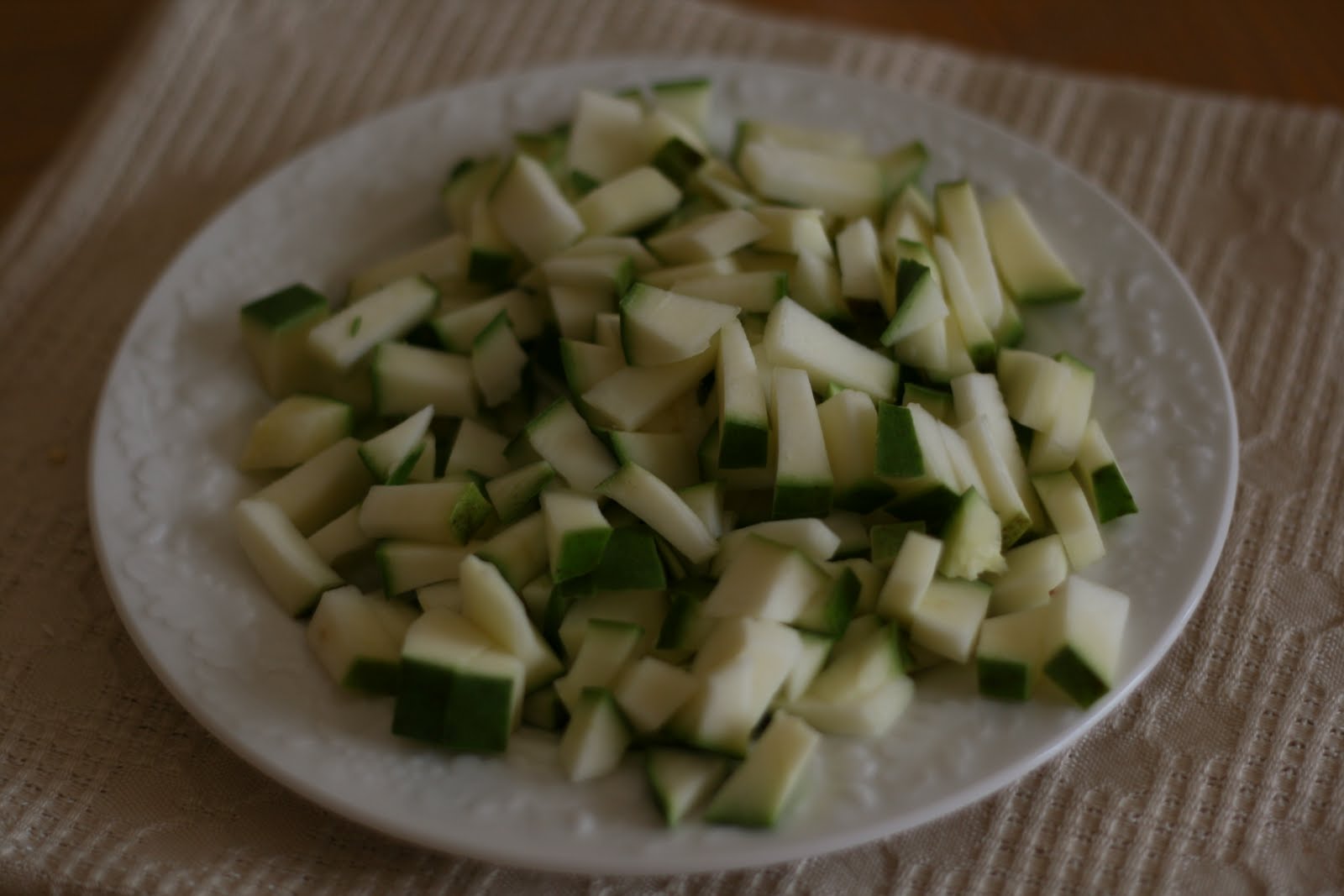
2.Clean and cut mango into small pieces.
3 Grind green chilies, red chillies, seasoning and salt together.
4.Make paste add mango pieces, turmeric and grind.(do not make a smooth paste)


It tastes great with Rice.

Monday, October 18, 2010

కొబ్బరి పచ్చడి: Kobbari Pacchadi- Coconut chutney

INGREDIENTS:
Fresh Coconut grated..............1 cup.
Red Chilly.....................................25 to 30.(depending the quality)
Split Bengal Gram.......................3 tbl.sp.
Cumin Seeds..................................2t sp.
Mustard...........................................2 t sp.
Green Chilly.....................................3 or 4 for flavour.
Tamarind..........................................big lemon size.
Jaggery...............................................optional.
Coriander seeds................................if desired only.
Turmeric...........................................1/2 t sp.
Salt for Taste.
Oil........................................................2 t sp.
Curry leaves........................................optional.
Asafoetida.
METHOD:
1.Take fresh coconut, grate it. or use the shredded coconut available in stores.
2.Heat oil, put split bengal gram, all seeds of cumin, mustard, coriander. Fry them light, then add red chilly. Roast few more minutes. Add green chilly, curry leaves, put off the heat. add asafoetida, turmeric. Let it cool.
3.Soak tamarind in enough water, just to become soft.
4.In a mixer grinder, put all those dry roasted ingredients, powder it. Now add coconut, jaggery grind again with salt. Do it, till it becomes soft. If needed add water. you can use the same water in which tamarind is soaked. When it is nice and fine take out into a bowl.
5.Eat it putting ghee in hot rice. This is a must in our families twice a month.
6.Instead of tamarind the raw mango can be used. That too tastes well, in a different way.

Wednesday, April 21, 2010

పచ్చి పెసర పచ్చడి: Pacchi Pesara Pacchadi- Split green gram chutney

Serves: Five. Preparation time: 5 minutes. But soaking takes 1 hour. 


Ingredients:
1 Cup Yellow (split and dehusked) Green gram dal (Dhuli moong dal, Pesara pappu)
4 Dry Red Chillies
1 Tsp Salt
1 level Tsp Cumin seeds
2 pinches Asafoetida
1 Tsp Lemon juice

Method:
1. Soak the Pesara pappu in water for one hour. Add enough water to immerse the pulse. 
2. Grinding: Grind the soaked Pesara pappu, Salt, red chillies, cumin seeds and Asafoetida into a smooth paste. Do not add water, the moisture from within the soaked pulses is enough. 
3. Squeeze 1 Tsp juice of Lemon over it and mix in properly. 


Precautions:
1. Lemon juice turns bitter if squeezed and left exposed. Hence, squeeze the lemon fresh over the Pacchadi.
2. Adjust salt and red chilli to taste.

Culture & Health:
This very-easy-to-prepare pacchadi is made fresh in small batches just for immediate consumption. It is rich in protein, has no oil at all, very good for health. The fresh lemon squeezed over it provides vitamins and phytochemicals. Can be prepared in a jiffy if you have the soaked pulse ready. It doesn't use the stove/heating at all, all ingredients are raw, hence the name "Pacchi pesara pacchadi".
A close cousin of this pacchadi is 'Vada pappu' (whole soaked pesara pappu with salt, red chilli) which is usually served as a prashadam especially on Rama Navami.

Variations:
Dry roast the Pesara pappu instead of soaking it. Also dry roast the red chillies & Cumin seeds and grind with salt, asafoetida & water, the recipe is similar to Kandi pacchadi. It can be eaten plain as 'Pesara pacchadi'. Alternatively, add roasted Eggplant to this to make Vankaaya-Pesara Pacchadi.

Trivia:
This Pacchi pesara pacchadi recipe is courtesy Manju pinni, it is a regular item on the Chivukula family menu.

నువ్వుల పచ్చడి -Nuvvula Pacchadi: Sesame seed Chutney

 Serves: Five. Preparation time: 15 minutes. 
Ingredients:  
1 Cup Sesame seeds
4 finely sliced Green chillies or Dry red chillies
2 Tsp Salt
1 Tsp Jaggery (or Brown sugar)
1 Tbsp Tamarind paste

Method:
1. Dry roast the Sesame seeds on low heat until they turn brown, around 4 minutes on a fresh saucepan. Set aside to cool. 


2. Dry toast the chillies for a minute until the green ones wither, or the red ones give off an aroma. Set aside to cool. 

3. Grinding: Add the cooled sesame seeds, salt and chillies to the mixer jar. Sesame seeds are rich in oil and clump together when ground. Hence, grind for short durations of time and mix the contents so that the ground seeds come up while unground seeds go down. Coarse grind. 

4. Mix in the sugar, tamarind paste and water (3/4 cup but adjust according to the water contributed by Tamarind paste+green chillies). Run the mixer once so that they get thoroughly mixed. 

Serve with hot rice. 

Precautions/Variations:
1. If you want to refrigerate this pacchadi to last for a few days, use dry red chillies. However, if you prepare a small quantity for immediate consumption as was made traditionally, use green chillies.
2. This simple pacchadi has extensive scope for improvization. You can add roasted Cumin seeds. You can omit the jaggery and include some roasted peanuts, or grated coconut, Or roasted Chickpeas (Putnala pappu). Follow your heart.
3. Ingredient measures can be adjusted to taste.
4. Sesame seeds are rich in oil & very tiny in size whereby they get heated up very quickly and can get burnt in a matter of seconds. Hence, while roasting, make sure the heat is low and keep stirring frequently for even browning. They continue to brown even when taken off the heat. 
5. Sugar caramalizes if heated. Mixer jar & blades heat up while grinding. Clumps of sugar can stick to the heated mixer jar blades and spoil the apparatus if not mixed in properly. Therefore, be sure to thoroughly mix in the sugar right at the end.

Culture and Health:
This pacchadi is rich in protein and essential minerals.
Sesame seed is a wonder food. It is an excellent source of heavy metals and minerals such as Calcium, Magnesium, Iron, Copper, Manganese. It is rich in antioxidants and has anti-cancer properties. The unpolished creamy-brown Sesame seed is better for health since the husk is rich in minerals while the polished shiny white seed loses most of its mineral content. A common traditional Indian snack is prepared by combining Jaggery-Sesame seed, the perfect protein-carbohydrate balance food. Ayurveda classifies Sesame seed as a 'heat giving' food. It enhances the metabolism and is advised to be consumed during severe winter months. 
Sesame seed oil is extensively used in cooking. It doesn't easily go rancid  & preserves food due to its high anti-oxidant load. Hence, it is used in preparing long-life preserves such as Avakaya & Mukkala pacchadi . It is a very light oil that can be easily absorbed into the skin, an ideal base for perfumed oils, massage oils, medicated hair oils in Ayurveda.  
The Sesame plant was first domesticated & farmed in India, it has been found in the ruins of the Harappan civilization. Unprocessed whole black Sesame seed is part of the Nava dhanya used in Yagnam. It is called तिल (Til) in Sanskrit. In fact, the word तैल (Teyla), Sanskrit for Oil, has its origins in Til. It is considered the next best to Cow ghee for use in religious ceremonies and can be offered to the Elements. One cannot stress the importance of this tiny little seed in Hindu culture.

Trivia:
My mother told me about this recipe. It is part of the quick బండ పచ్చడులు (Banda pacchadulu) that her grandmother used to make with a mortar-pestle.

Tuesday, April 20, 2010

కంది పచ్చడి: Kandi pacchadi: Pigeon peas chutney

Serves: Three. Preparation time: 15 minutes


Ingredients:
1 Cup Pigeon peas (Tuvar dal, Kandi pappu)
3 Dry red chillies
3 Tsp Cumin seeds
1 Tsp Salt or to taste
1/2 clove Garlic


Method:
1. Dry roast the peas on low heat until they turn golden brown and give off an aroma, approximately 3 minutes.


2. Break up the dry red chillies into smaller bits and dry roast them on low heat until they are brown-black & give off an aroma, around 1 minute. 


3. Dry roast the Cumin seeds on low heat until they turn darker & give off an aroma, it takes less than a minute. If making a small quantity, you can drop them into the roasting peas when they are almost done. 


4. Crush the garlic clove and dry roast it until it turns golden in a few seconds. If making a small quantity, you can drop it into the roasting peas when they are almost done instead of roasting separately.  


5. Grinding: When all the roasted ingredients cool down, grind them to a powder along with Salt. 


6. Add some water and grind once again so that it is evenly mixed in. 


7. Add water until the preparation looks a little runny. The peas soak up the water in a few minutes and the consistency improves. 


Serve with hot rice and a generous topping of ghee
This pacchadi goes well with Ullipaya pacchi pulusu. It is delicious when mixed into rice with Avakaya


Precautions/Variations:
1. You may use a drop of oil while roasting the ingredients. 
2. Stir the ingredients frequently during the roasting process to ensure uniform browning, make sure the heat source is low as the ingredients can get burnt within a few seconds. 
3. Adjust dry red chillies, salt, Cumin to taste. 
4. Some recipes include grated coconut. 
5. This pacchadi is best prepared fresh before mealtime. If left over, the ground pigeon peas absorb the water & dry into a soggy lump. Hence, leave the almost-done pacchadi at step 5. Follow up on step 6 & 7 just before mealtime. 


Culture & Health:
The term 'Pacchadi' usually conjures up the image of a fruit or vegetable in our mind. However, traditional Telugu cuisine has Pacchadis such as Kandi pacchadi, Pesara pacchadi, Nuvvula pacchadi which are made from grains/pulses.
This genre of pacchadis is rich in protein. Combined with rice, it makes a protein-carbohydrate balanced diet that only needs some fresh vegetable/fruit to supply vitamins. Hence, it is paired with liquid vegetable preparations such as Ullipaya pacchi pulusuVankaya pacchi pulusuMenti pulusu, etc...
These pacchadis are prepared fresh daily in small quantities, they are also called 'Banda pacchadulu' (బండ పచ్చడులు) since they were traditionally just ground with a mortar-boulder using very few basic ingredients.
It is also eaten mixed into hot rice and Avakaya.

Trivia:
This preparation is a star item on the Chivukula family menu.
The recipe is courtesy Manju pinni.

దోసకాయ పచ్చడి: Dosakaya Pacchadi: Round Yellow Cucumber Chutney

Serves: Fills a 450 ml/16 fl oz bottle. Preparation time: 1 hour including assembling ingredients, washing, chopping, roasting, grinding. 


Ingredients:
4 Round yellow Apple cucumbers (Dosakaya)                    
2 Tbsp Oil
2 heaped Tsp Split Black Gram
4 Dry Red chillies
1 heaped Tsp Coriander seeds
1 heaped Tsp Cumin seeds
1 level Tsp Mustard seeds
1 level Tsp Turmeric
1 level Tsp Asafoetida
1 level Tsp Fenugreek powder
1 heaped Tsp or to taste; Salt
1/4 Tsp Sugar
3 sprigs Cilantro


Method:
1. Wash Dosakaya and pat dry. Cut into half, peel the outer skin.  Scoop out the clump of seeds from its middle and discard. Finely chop into small pieces. Set aside. 
2. Wash Cilantro in fresh water and chop fine. Set aside. 
3. In a saucepan/wok, heat the oil on medium-low flame. As it is heating, break dry red chillies into small pieces. 
4. When oil is medium hot, add Black gram and dry red chillies. Stir frequently so that all ingredients are evenly browned. When black gram turns golden yellow, add Coriander & Cumin seeds. When black gram turns golden red, add Mustard seeds, Asafoetida & Turmeric (if you add turmeric initially, you won't be able to make out the colour difference in black gram), mustard seeds will splutter.
5. Switch of the heat and add Fenugreek powder. Let this tempering cool. 
6. Grinding: First grind the spice mix resulting from steps 4&5 along with the salt. Next, add the finely chopped Dosakaya and grind with a quick spurt of power on whipping/Pulse mode. Open the mixer jar, add sugar and mix the contents so that the mashed pieces come up while untouched pieces go down. Grind once again on whipping/pulse mode. Repeat this process until all pieces are roughly mashed, around 4 times for the quantity mentioned in this recipe. 
7. Transfer contents into a clean glass jar, garnish with the Cilantro and refrigerate. 


Precautions/Variations:
1. Dosakayas sometimes turn out bitter. Hence, while chopping the Dosakaya, taste a tiny piece of each fruit. Discard any bitter fruit otherwise the entire dish can turn out bitter.
2. Manju pinni suggests: If you like whole crisp grains in your recipe, you can grind the tempering-Dosakaya together so that the blackgram doesn't get properly ground down. Or, you can grind Dosakaya and pour the tempering over it.
3. One can use green chillies too in this recipe.
4. The basic tempering mix used in this recipe has been described earlier in Beerakaya, Tomato pacchadis too. Several chutneys can be made with this same spice base. You can prepare the spice base to last for a week and make a fresh chutney everyday using a small quantity of fresh vegetable and some of the spice base. This way, we can have quick variety frequently.
5. Dosakaya is a sour fruit, hence the recipe doesn't need a souring agent. However, if you feel the need, you may squeeze in a few drops of lemon juice just before serving, or mix in some tamarind paste.
6. If you don't have Dosakaya, you can use the ordinary English cucumber, it closely mimics the flavour, but will need a souring agent (tamarind paste or lemon juice).
7. If you intend to make a large quantity of this chutney, it may be advisable to dry roast the Coriander and Cumin seeds separately and then mix into browned black gram & red chillies. This is because all these spices have different cooking times and easily stay undercooked/get burnt within a few seconds of delay.
8. Coriander & Cumin Seeds may be substituted with powders.
9. If using whole Fenugreek seeds: Dry roast them to a brown-black, let them cool, powder and then add to the cooled tempering.


The-Hunt-For-An-English-Name, Culture and Health:
Dosakaya is a South Indian cultivar of Cucumber/Melon. It belongs to the 'Cucurbitaceae' plant family, to which all gourds & melons belong. Cucumber (Cucumis sativus) originated in India. Hence, there are several species and cultivars of cucumber/melon/gourd unique to the Indian subcontinent, with no Western/English equivalents. 
It can be translated at best as a round yellow cucumber... Some people describe it as a 'Lemon Cucumber', others call it an 'Apple Cucumber', but it is really not one. I even heard the term 'Melon Cucumber'. After much research into the species of edible cucumbers & melons (during which I collided into more confused people like me, without any conclusive results), I concluded that it does not have an accurate English name, the closest I got to in scientific names was "Cucumis melo var. agrestis". 
The presence of the chemical 'Phenylthiocarbamide' is believed to lend bitter tones to some fruit. Dosakaya is rich in vitamins, minerals and phytochemicals, low in fat. Fruits/vegetables from the 'Cucurbitaceae' plant family are full of water & fibre, need very little oil to cook and are said to be very good for health according to Ayurveda. Traditional Telugu cuisine exploits a variety of these fruits/vegetables: Beerakaya, Potlakaya, Boodida gummadikaya, Erra gummadi, Kakarakaya to name a few.  
This pacchadi is especially very good for health since the Dosakaya is consumed raw. 


Trivia:
I learnt this recipe from my mom-in-law(Indira aunty), she cooks an amazing variety of delicious pacchadis and podis. My foray into the world of pacchadis started all because of Krishna's love for pacchadis. Now I am addicted to aunty's pacchadi recipes even more than he is!
I added some minor precautions/suggestions from various sources into it. 

Friday, April 2, 2010

టమేట పచ్చడి- Tamata Pacchadi: Tomato Chutney

Serves: Fills a 500 ml bottle. Preparation time: 30 minutes.


Green Tomato Chutney

Ingredients:
6 medium sized Green Tomatoes
5 Green chillies
6 tsp Oil
2 Tsp Mustard seeds (Rai, Avalu)
1 Tsp Turmeric
1 shallow Tsp Asafoetida
1 shallow Tsp Fenugreek powder
1 Tbsp Tamarind paste
1 Tsp or to taste; Salt
1/4 Tsp Sugar
3 sprigs Cilantro

Method:
1. Chop Tomatoes, Green Chillies into chunks. Fine chop the Cilantro.
2. Heat 4 Tsps oil. Add Green chillies and Green tomatoes. Cover and cook on low flame until tomatoes soften, around 6 minutes.
Add Tamarind paste and leave to cool.
3. Heat 2 Tsps oil in a pan. Add Mustard seeds. When they splutter, switch off flame and add Fenugreek powder, Asafoetida, Turmeric. Let it cool. 
4. Grinding:
First grind the spice mix from step 3. Next add the vegetables from step 2, mix in salt & sugar and grind on pulse/whipping mode with quick spurts of power so that the tomatoes are not completely mashed
5. Add Cilantro, transfer into a bottle, and refrigerate.


Ripe (Red) Tomato Chutney

Ingredients:
6 medium sized Ripe (Red) Tomatoes
3 Tsps Oil
2 heaped Tsp Split Black Gram
4 Dry Red chillies
1 heaped Tsp Coriander seeds
1 heaped Tsp Cumin seeds
1 level Tsp Mustard seeds
1 level Tsp Turmeric
1 level Tsp Asafoetida
1 level Tsp Fenugreek powder
1 Tbsp Tamarind paste
1 Tsp or to taste; Salt
1/4 Tsp Sugar
3 sprigs Cilantro

Method:
1. Chop Tomatoes into chunks. Finely chop the Cilantro. Break up the Dry red chilli into small bits.
2. Heat 1 Tsp oil in a pan. Add tomatoes, cover and let simmer until tomatoes wither/go tender, but not completely done. Add Tamarind paste and leave to cool.
3. Heat 2 Tsps oil in pan. Add Black Gram and Dry Red chillies. When black gram turns pale gold, add Coriander and Cumin seeds. When Black Gram goes golden brown (dry chillies would be dark brown & giving off an aroma by now), add Mustard seeds, they'll splutter. Switch off flame and add Fenugreek powder, Turmeric and Asafoetida. Leave to cool.
4. Grinding:
First add the spice mix from step 2 and grind. Then add Salt, Sugar and the Tomatoes from step 3 and coarse grind on pulse/whipping mode with quick spurts of power.
5. Mix in the chopped cilantro. Bottle and refrigerate.

Variations:
1. You can mix and match the ingredients as per taste, like I made a red-green tomato pacchadi recipe mix since my green tomatoes were actually yellowing.
2. Manju pinni suggests: Prepare the chutney first and then pour the tempering  of step 3 over it right at the end. This way, the spices smell fresh, the seeds (black gram, mustard) are whole & crisp instead of being ground down.
3. If preparing a large quantity, it may be wise to first dry roast the Cumin and Coriander seeds separately and then add them to the fried black gram-red chillies. This is because all these spices have different cooking times and can easily stay undercooked/get burnt within a few seconds of misjudged timing.
4. Cumin & Coriander seeds can be substituted with powders. 
5. If using whole Fenugreek seeds: Roast to a black-brown, leave to cool and powder. Then add to the cooled tempering from step 3


Culture & Health:
Green or Ripe tomato pacchadi is eaten with fresh hot rice & ghee. It is also an excellent accompaniment with Dosas, Idlis, Uttappams. It is an awesome spread for sandwiches and savoury snacks. Totally yummy with yogurt-rice.
Fresh pacchadis are full of vitamins and antioxidants, they can be made with very little oil & salt for the health conscious.

Trivia:
The Green Tomato pacchadi recipe is my mom-in-law's (Indira aunty), Krishna's favourite favourite favourite.
The Ripe tomato pacchadi recipe is mom's, it was an ever-green (or should I say ever-red) part of our family menu, my sister LOVED it like crazy, and mom makes it frequently.
Do you guys know what Tomato is called in Telugu? A local cultivar that produced small sour fruit was called "Ramamulagakaaya" during my mother's childhood. Of course, it is a now-extinct name, we only see normal tomatoes in the market, and Tomato is Tamata for us! :-)

Monday, March 29, 2010

Idli Chutney

Serves: Four persons. Preparation time: 20 minutes

Ingredients:
1 cup Peanuts
1/4 cup Split Bengal gram (Chana dal, Senaga pappu)
1/2 tbsp tamarind pulp
1/2 tsp Salt or to taste
2 Dry Red Chillies or to taste

For Tempering:
1 tsp split black gram (Urad dal, Minappappu)
1 tsp Mustard seeds
2 pinches Asafoetida
3 Curry leaves (Kadipatta, Karuvepaku)
1 tsp oil

Method:
1. Break the Dry Red Chillies into pieces and dry roast them until they turn red-brown and give off an aroma, around 2 minutes on a low flame. Set aside. 
2. Dry roast peanuts until they are browned and give off an aroma, around 2 minutes on a low flame. You may use a drop of oil. Set aside. 

3. Dry roast the Senaga pappu until it turns light golden brown and gives off an aroma, around 1 minute on a low flame. Set aside.
4. When the ingredients from steps 1. to 3. cool down, grind them in the mixer with salt and water (around 1 cup) to make a smooth paste. Transfer the chutney into a bowl and mix in the tamarind paste. It may look runny initially, but the peanuts/bengal gram soak & absorb the water thereby improving its consistency.
5. Heat oil in a small saucepan or flame proof ladle. Add Minappappu. When it browns, add Heeng, Mustard seeds and Curry leaves. Turn off the heat. Pour this tempering over the chutney and stir it in. 


Variations:
Use more tamarind paste if you like sour tones. Some recipes include desiccated coconut powder or fresh grated coconut. You may also add green chillies during the grinding process. Yet others include garlic, though it is really not traditional.


Culture & Tradition:
This chutney is traditionally served with Idli or Dosa


Trivia:
This recipe courtesy Manju pinni.

Friday, March 12, 2010

బీరకాయ పచ్చడి- Beerakaya pacchadi (Ridge gourd chutney)

Serves: Fills a 16 fl oz bottle. Preparation time: 40 minutes including washing/chopping vegetables, assembling ingredients, cooking & grinding. 
Ingredients:
2tsp split bengal gram (Dhula chana dal, Senagapappu)
2 tsp split black gram (Dhuli urad dal, Minappappu)
1 tsp Mustard seeds (Rai, Avalu)
7 pieces Dry red chilli (Endu mirapa)
1/2 Tsp Fenugreek powder (Methi, Menti)
3/4 tsp Asafoetida (Heeng, Inguva)
1 tsp Turmeric (Haldi, Pasupu)
1.5 tsp Cumin powder (Jheera, Jilakara)
1.5 tsp Coriander powder (Dhania)
4 pieces green chillies
2 Large sized Ridge gourds (Tori, Beerakaya)
3 tsps Oil
5 stems Cilantro (Kotimeer)
2.5 tsps Salt
3 tbps boiled tamarind paste


Method:
1. Wash and peel ridge gourds. (You could use the peel to make Beera kaya thokku pacchadi.) Chop into pieces. Chop the cilantro and set aside.
2. Heat 1 tsp oil, add gourds, salt and turmeric. Cover and cook until done, approximately 10 minutes. Leave to cool.
3. Heat 2 tsp oil. Add senagapappuminappappu, dry red chillies. When they brown & give off an aroma, add mustard seeds. When they splutter, add green chillies, add the powdered spices (Fenugreek, Asafoetida, Cumin, Coriander). Switch off flame & cover, the heat from the oil is enough to cook the spice powders & green chillies. Leave to cool.
4. Finely grind the roasted spices of step 3.
5. Add the tamarind paste, the cooked vegetables of step 2. and coarse grind with quick spurts of power on pulse/whip mode.
6. Transfer into a jar and add the chopped cilantro.
7. Refrigerate.

Serve with hot rice, with a generous topping of ghee. Can be used as a spread/dipping with savoury snacks, accompanies Idli/Dosa/Pesarattu.

Useful Tip/Trick:
Makes a delicious instant Raita/Perugu pacchadi if mixed into yogurt, the resulting raita even goes with north Indian dishes like Pulao or Alu parantha.

Variations:
1. Some recipes do not instruct to peel the ridge-gourd. It can be used whole with its skin, especially if it is young & tender. 
2. You may substitute Cumin/Coriander powders with seeds as they will get ground in the mixer. However, seeds will need more time to brown/splutter, adjust the sequence of adding into oil accordingly.
3. If using fenugreek seeds: Roast them to a black-brown, cool and powder. Add this pre-roasted powder to the cooled tempering from step (3). 
4. The ground spices resulting from step (3) and (4) can be used as a base for many other pacchadis. Instead of ridge gourd, one can add cooked red tomatoes or round yellow cucumbers (Dosakáya).
5. If you like the spices whole & crisp, do not grind them after step (3). Instead, pour the cooled tempering over the ground vegetables. 


Culture & Health:
A very good for health pacchadi, ridge gourd is low in calories, rich in vitamins & minerals. It is an excellent source of dietary fibre. This pacchadi is great taste with great health as it needs very little oil. It is best prepared fresh in small quantities, enough to last for three or four days. This is a typical Telugu preparation.

Trivia:
I learnt this recipe from my mom-in-law (Indira aunty). Krishna really adores his mother's pacchadis. I first started experimenting with pacchadis under aunty's guidance and I must say I am thoroughly addicted to her recipes, perhaps I eat even more pacchadi than Krishna!!

Monday, March 8, 2010

పుదినా పచ్చడి- Pudina pacchadi

Serves: upto 10 generous helpings; Preparation time: 40 minutes including washing/chopping/cutting/roasting/grinding.

Ingredients:    
3 tsps oil
1 tsp Cumin seeds (Jheera, Jilakara)
4 Dry Red chillies (Endu mirapakaya)
1 fistful Peanuts (Moongphalli, Vesinaggkaya)
1 fistful Sesame seeds (Til, Nuvvulu)
2 bunches- Mint (Pudina) greens
4 large stalks- Cilantro (Hara Dhania, Kotimeera)
1 tbsp Tamarind paste
1 medium sized onion
4 Green chillies
1.5 tsp Salt
1 tsp Sugar

(The Dry Red & Green chillies are to taste, use generously if you like the spice. Adjust the salt and tamarind accordingly. Large mild green chillies lend an awesome flavour to this recipe. Otherwise, use the usual small fiery Indian green chillies.)

Method:
1. Wash the greens (Pudina and Cilantro) in fresh running water. If the Pudina greens are young, they can be used whole. If the stems are fibrous, discard them & only use the leaves. Coarsely chop the Pudina and Cilantro. Set aside. Also chop the onion & green chillies into chunks and keep aside.
2. Heat 2 tsps of oil. When it is medium hot, add the dry red chillies broken into pieces. Roast them. When they are half done, add the Jheera. Add peanuts. Roast. When they are almost done (browned, giving off an aroma), add Sesame seeds. Switch off the flame when Sesame seeds splutter. Set aside.
3. Heat 1 tsp of oil. Add the chopped onions and green chillies, add salt. Roast them until they are half done. Transfer the contents into another cup and mix in the tamarind paste.
Now in this same saucepan (it will have left over traces of oil smeared), add the greens and roast them for 1 to 2 minutes until they partially wither in the heat.
4. Grinding:
In the blender, first add the mixture resulting from step (2). Blend with a little water to make a smooth paste. Next add the contents of step (3), these should be coarse ground using quick spurts of power on pulse so that the onion-green chilli chunks are still visible. Finally, add the withered greens and sugar, mix them in properly. Grind with quick spurts of power on pulse so that they are coarse ground.

Suggestions/Variations:

This Pacchadi is coarse ground, individual ingredients release an awesome medley of flavours & taste when crushed under our teeth as we eat, so make sure not to grind it too smooth.

Culture & Health:
This Pacchadi has the goodness of fresh Pudina (Mentha arvensis var. piperascens) & Cilantro- vitamins, antioxidants, essential oils, all those miracle phytochemicals, minerals. Peanut-Sesame provide protien and are a store-house of minerals. Half roasted onions & green chillies also provide vitamins & minerals. Traditional Andhra cuisine is full of such fresh chutneys and Pacchadis for a healthy lifestyle. Traditional cooks make Pacchadi fresh everyday, to make optimum use of antioxidants & those goodie-chemicals that get oxidized/denatured if stored. Moreover, it has such little oil, great taste along with health!!!


Trivia:
My favourite favourite pacchadi from childhood. This is my mother's recipe, she does very little cooking, but what little she does, she has some wonderfully yum recipes. I believe she learnt this recipe from her househelp-cook, Nagamani. How I used to pester Tittu to make this!
The recipe turned out very long in writing and explanation, but believe me, it is one of the easiest, you only need to chop the ingredients into large chunks, half roast them and lazily half-heartedly grind them coarse! :-P Put the minimum effort needed to make it, and you'll be surprized at how yummy it tastes. Thanks to Nagamani, wherever she is!

Friday, February 19, 2010

కాయకూరల పచ్చడి: Kaaya kurala pacchadi- Mixed vegetable chutney


( MY MOTHER-IN-LAW SUNDARAMMA'S RECIPE)

INGREDIENTS:
1 beerakaya/Ridge gourd
1 dosakaya/ Yellow cucumber
5 bendakayalu/okra
1 vankaya/egg plant (long)
2 big tamata/tomato
5 pachimirapakayalu/green chillies(adjust as per taste)
Marble size tamarind or 1tsp Amchur
2tbs oil
cilantro/kothimera for garnishing
salt to taste
1/4 tsp turmeric

Popu/Thiragmatha
1tbs urad dal/minapappu
1/2 tsp mustard seeds/avalu
1/2 tsp fenugreek seeds/ menthulu
1/2 tsp hing/inguva

Thayaruchyatam/preparation
1. Soak tamarind. Clean, peel and chop all vegetables into pieces.
2. Heat oil and add chillies and all the chopped vegetables.
3. Saute till they are soft
4. Once cooled, grind tamarind and chillies first, add the rest of the sauted vegetables, salt and grind again to a paste.
5. Heat oil in another pan and add the mustard Seeds and once they splutter, add fenugreek seeds, urad dal and hing, once you get the aroma turn off heat
6. Pour the oil mixture over the paste.

Accompaniments:
It tastes great with hot rice, roti ,dosa and upma .

Warning : Taste the ridge gourd and yellow cucumber as they taste bitter sometimes.

Monday, February 15, 2010

బీరకాయ తోక్కు పచ్చడి: Beerakaya Thokku Pacchadi- Ridge-Gourd Skin Chutney


Ridge Gourd is:
Low in Saturated Fat, and Cholesterol
High in Dietary Fiber, Vitamin C, Riboflavin, Zinc, Thiamin, Iron, Magnesium and Manganese.

The nutritional value of gourd makes it suitable for:
Maintaining optimum health
Weight loss

Avoid including gourd in your diet if you're interested in:
Weight gain

Preparation Time: 20 mts
Serves: 4-5 persons
Region: Andhra
Utensils: Wok/Pan, small seasoning Pan, Wooden Laddle, Indian Mixer-Grinder/Coffee Grinder


Ingredients:


Peel the skin of 3 large Ridge Gourds ( use the peeled gourds for a vegetable curry later )

1 tbsp split Gram Dal/Mina Pappu
5-6 dry Red Chillis/Endumerapakayalu, de-seed them and tear them
1 tsp Cumin/Jeelakarra seeds
5-6 Asian Green Chilli Peppers/Pachimerapakayalu
1 small Onion/Ullipaya peeled and sliced
1 pod Garlic/Vellullipaya peeled and crushed
1/4 cup finely chopped Coriander leaves/Kothimeera
2 tsps Til/Gingelly/Seasame Oil/Noona
Juice from small lemon sized Tamarind (soak in warm water for 15 mts)/ 1 tablespoon Tamarind paste/Chintapandu Gujju
Salt to taste/Uppu


For Tiragamutha/Popu/Tadka/Seasoning:


1/2 tsp Mustard Seeds/Avalu
1-2 dry Red Chillis/Endumerapakayalu, de-seed them and tear them
Pinch of Asafoetida/Hing/Inguva
8-10 Curry Leaves/Karivaypaku
1/2 tsp Oil/Noona

Method:

1. Heat a tsp of Oil in a cooking Pan/Wok,
2. Add split Gram Dal, Cumin seeds and Red Chillis and stir fry till the Dal turns red.
3. Remove and keep aside.

4. In the same Pan/Wok, add another 1 tsp of Oil and add the Green Chillis and saute till they are soft and a little translucent.
5. Add the Onion, Garlic and Coriander leaves to this and saute till translucent.
6. Add the Ridge Gourd chopped peels and fry on medium heat for 5-6 mts.
7. Add the Tamarind pulp to it and leave aside to cool.

8. Once cooled, grind the dry masala first ie the Dal/Cumin/Chilli coarsely, add the rest of the sauteed ingredients along with Tamarind and Salt and grind again to a rough paste.

Separately
9. Heat Oil in a pan for seasoning.
10. Once hot, add the Mustard Seeds and once they splutter,
11. Add Asafoetida, once you get the aroma
12. Add the Curry Leaves and turn off heat
13. Pour the Oil mixture over Chutney.

Accompaniments:

1.Works excellently with Adais, Rava Dosas, Appams, Idiyappams,
2.Can be eaten mixed with Rice and Ghee,
3.Spread over Bagel or for Sandwiches
4.Dip for fresh Vegetables or Crackers,
5.Side Dish for Chappatis, Rotis, Parathas, Puris

Modifications:

You can skip the Onion and Garlic if you are Jain or Vaidika/Sattvika!
Instead add a lot of fire roasted or sauteed fresh green Asian chilli peppers/Pachimerapakaayalu
Garnish with freshly cut Kothimeera/Dhaniyapatta/Cilantro instead of Curry Leaves

History:

The fruit section of L. aegyptiaca may be allowed to mature and used as a bath or kitchen sponge after being processed to remove everything but the network of xylem. Marketed as luffa or loofah, the sponge is used like a body scrub. This version is called lifah in Arabic, bholor jaal in Assamese, dhundul in Bengali, ghiya tori or nerua in Hindi. Softly-textured luffa sponges are not derived from the luffa fruit, but are manufactured by folding in several layers of soft mesh-like fabric into a cloud-like shape; commonly used in tandem with shower soaps.

Home Remedy:

Its juice is used as a natural remedy for jaundice. The juice is obtained by pounding the bitter luffa and squeezing it through a cloth. Bitter luffa seeds and dry crusts are also available and can be used for the same purpose.
In China and the Philippines, the Luffa or Patola is eaten as a green vegetable in various dishes.
In Paraguay panels are made out of luffa combined with other vegetable matter and recycled plastic. These can be used to create furniture and construct houses.


Backstory:


What can I say about this Pacchadi except that if you have never had the good fortune to eat it mixed with hot rice and ghee with your fingers you are a pitiable soul! Andhraites eat a lot of gourds, given that most vegetables that the West knows of ie Potato, Tomato, Peppers etc were 'foreign' to India before the Portugese arrived in the 15th century. A variety of gourds are popular and make for ethnic Andhra Cuisine. Many gourds are concocted into something tasty. Especially in the Brahmin families where costly ingredients were eschewed very innovative recipes evolved with simple ingredients. The SKIN that is peeled from a RidgeGourd makes for one of the finest chutneys in the country. The skin is rough and one has to wash the vegetable well before peeling and storing the skin in an airtight ziploc bag.

వేరుసెనగ పచ్చడి/Verusenaga Pacchadi / Groundnut Chutney


Preparation Time: 15 mts
Serves: 3-4 persons
Region: Rayalseema, Telangana
Utensils: Wok/Pan, small seasoning Pan, Wooden Laddle, Indian Mixer-Grinder/Coffee Grinder

Ingredients:

1 cup peeled and roasted Peanuts/Verusenagakayalu
1 small Onion peeled and sliced/Ullipaya
1 pod Garlic peeled and crushed/Vellullipaya
6 dry Red Chillis, de-seeded, broken into pieces/Endumerapakayalu
2 tsps Til/Gingelly/Seasame Oil/Noona
1/2 cup Water/Neellu
Juice from small lemon sized Tamarind (soak in warm water for 15 mts)/ 1 tablespoon Tamarind paste/Chintapandu Gujju
Salt to taste/Uppu


For Tiragamutha/Popu/Tadka/Seasoning:


1/2 tsp Mustard Seeds/Avalu
Pinch of Asafoetida/Hing/Inguva
8-10 Curry Leaves/Karivaypaku
1/2 tsp Oil/Noona

Method:

1. Heat oil in a Pan or Wok,
2. Add the Garlic and dry Red Chillis and stir fry for a few seconds till they are browned.
3. Add the sliced Onions and saute further for 4-5 mts on medium heat till they are translucent.
4. Turn of heat and cool.

5. Grind coarsely the roasted Peanuts, Tamarind pulp, the Onion/Garlic/Chilli mixture along with Salt and half a cup of Water.

Separately
6. Heat Oil in a pan for seasoning.
7. Once hot, add the Mustard Seeds and once they splutter,
8. Add Asafoetida, once you get the aroma
9. Add the Curry Leaves and turn off heat
10. Pour the Oil mixture over Chutney.

Accompaniments:

1.Works excellently with Idlis or Dosas.
2.Can be eaten mixed with Rice and Ghee,
3.Spread over Bagel or Bread like Peanut Butter,
4.Dip for fresh Vegetables or Crackers,
5.Side Dish for Chappati, Roti, Paratha

Modifications:

You can skip the Onion and Garlic if you are Jain or Vaidika/Sattvika!
Instead add freshly grated Kobbari/Coconut to the peanut puree and give a quick run in the mixer
Garnish with freshly cut Kothimeera/Dhaniyapatta/Cilantro instead of Curry Leaves


History:


Peanuts originated in South America, probably in Brazil and Peru. They were grown as far north as Mexico by the time the Spanish began their exploration of the New World. When the explorers returned to Spain, they brought peanuts with them. Later, traders were responsible for spreading peanuts to Africa and Asia.

Home Remedy:

Peanuts are not recommended in Ayurveda. Peanuts are not really nuts; they are legumes. Peanuts are difficult to digest and can make one feel sluggish and lethargic in body and mind. Ayurvedically, it is better to use either cashew or almond butter for sandwiches.


Backstory:


I love this Pacchadi a lot! Its easy to make and is very healthy too. Had a lot of it in Bidar, Karnataka.If you are close to Karnataka or Maharashtra you cannot avoid this chutney as that region is the largest peanut growing region of India. 'Shenga Chutney' is ubiquitous in any Marathi or Kannada home of Bidar/Gulbarga and Marathwada which were under the Nizam but also those parts of Telangana which were under the Nizam got influenced by this cuisine and adapted it.

Tuesday, February 2, 2010

పచ్చి మిరప కాయి పచ్చడి- (Pacchi Mirapakaya Pacchadi)- Green Chilli Chutney


Serves: Fills a 1 lb bottle. Preparation time: 50 minutes including washing/cutting/assembling ingredients/cooking/grinding.
Ingredients:
2.5 tbsp Oil
1 tsp Mustard seeds (Rai, Avalu)
1 level tsp Fenugreek (Methi, Menti) powder
1 level tsp Asafoetida (Heeng, Inguva)
0.5 Kg- Green chillies
2 tsps Salt
4 tbsps cooked tamarind paste
1 heaped tsp Coriander (Dhania) seeds
1 heaped tsp Cumin (Jheera, Jilakara) seeds
1 tsp Turmeric (Haldi, Pasupu)

Method:
1. Wash and destem green chillies (No need to chop them as they will soften in cooking process and ultimately get ground. Indian chillies are best suited for this recipe. If using a large sized cultivar, you can chop them into large chunks.). Set aside.
2. Heat the oil, add the green chillies and fry until they brown.
3. Remove the chillies out of the oil and set aside. In that same oil, add mustard seeds. When they crackle, add fenugreek powder, cumin seeds, coriander seeds, asafoetida, turmeric and salt. Let the preparation cool.
4. Grind the spices & tamarind in the food processor, add the green chillies at the end & grind on pulse.
5. Bottle into a clean dry glass container and refrigerate. Takes upto four days for the flavours to blend in. 
I noticed that this chutney has a long shelf life if placed in the refrigerator, since chillies are highly alkaline.
It takes upto 4 days for the spices-chillies-tamarind-salt to marinate so that the flavours blend in, the pacchadi doesn't taste as nice when freshly made.
It is very yummy when eaten with fresh hot rice & ghee. It can also accompany upma, idli, dosa, pesarattu, anything as per our taste.

Precautions/Warnings/Variations:
1. The amount of spice to be added depends on how strong the green chillies are. The above are only estimates, very hot chillies may need more salt/tamarind/fenugreek/cumin/coriander, milder chillies may need less salt/tamarind. This is because these spices+chillies marinate & help to bring down the fieriness of the chillies.
2. If you don't have coriander & cumin seeds, you can use coriander & cumin powder.
3. If you don't have fenugreek powder: Roast fenugreek seeds until they are black-brown. Cool and powder. Add this pre-roasted powder to the recipe along with green chillies.
4. If you're making a huge quantity to store for longer time, more oil should be added so that there is a 'pickling' effect.
5. The last three ingredients (coriander, cumin and turmeric) are not traditional, I add them out of my own taste.
6. According to the traditional recipe, tamarind+salt paste is boiled separately and added to the cooled green chillies preparation just before grinding. I cooked the two together since that saves me space & time.
7. Do not taste much of it while preparing, it can cause severe acidity within seconds, and don't think this to be a dumb suggestion :-D


Useful Tip/Tricks:
It is an awesome spread for grilled sandwiches & savory snacks. It can be used as a ready-to-add spice sauce while preparing other dishes, half a spoon of this chutney lends awesome flavour.

Trivia:
I learnt this recipe from my mom-in-law (Indira aunty). Fiery green chilli pacchadi is truly the queen of all pacchadis.